
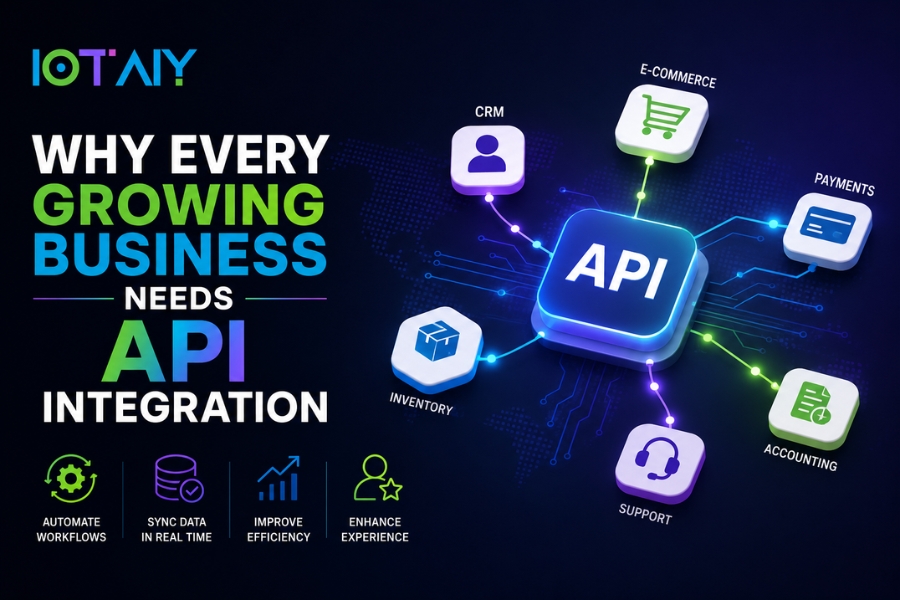
Businesses today rely on multiple software platforms to manage operations, sales, marketing, customer service, inventory, accounting, and communication. However, when these systems operate independently, businesses often face inefficiencies, duplicate work, data inconsistencies, and slower decision-making. Therefore, organizations are increasingly investing in API integration to connect their systems and improve operational efficiency.
As businesses grow, the number of tools and platforms they use also increases. Consequently, managing disconnected systems becomes more challenging and can limit scalability. API integration helps eliminate these barriers by allowing applications to communicate and share information automatically.
In this article, we explore why API integration has become essential for growing businesses in 2026 and how organizations can benefit from connected digital ecosystems.
What Is API Integration?
API stands for Application Programming Interface. API integration enables different software applications to communicate, exchange data, and work together seamlessly.
Instead of manually transferring information between systems, API integrations automate data sharing and business processes.
- Connects software platforms
- Automates workflows
- Improves data accuracy
- Reduces manual work
- Enhances business efficiency
As a result, businesses can streamline operations and improve productivity across departments.
Why API Integration Matters in 2026
The modern business environment depends on cloud-based software, automation, and real-time data access. Therefore, API integration has become a critical component of digital transformation strategies.
- Growing software ecosystems
- Increased automation requirements
- Demand for real-time data
- Improved customer experiences
- Scalable business operations
Thus, businesses that invest in API integration gain a competitive advantage through greater efficiency and flexibility.
Common Business Systems That Benefit from API Integration
Most businesses use multiple applications to support daily operations. API integration allows these systems to exchange information automatically.
- Customer Relationship Management (CRM) platforms
- Ecommerce systems
- Accounting software
- Marketing automation tools
- Inventory management systems
Consequently, employees spend less time managing data and more time focusing on strategic business activities.
Key Benefits of API Integration
API integration provides numerous benefits that directly impact business growth, efficiency, and customer satisfaction.
Improved Operational Efficiency
Manual processes consume valuable time and often lead to errors. API integration automates repetitive tasks and reduces administrative overhead.
- Faster workflows
- Reduced manual data entry
- Improved productivity
- Fewer operational bottlenecks
- Enhanced collaboration
Better Data Accuracy
When systems exchange data automatically, businesses reduce the risk of human error and maintain consistent information across platforms.
- Real-time synchronization
- Consistent customer data
- Reduced duplication
- Improved reporting accuracy
- More reliable decision-making
Enhanced Customer Experience
Connected systems help businesses deliver faster, more personalized customer experiences.
- Quicker response times
- Improved customer support
- Personalized interactions
- Faster order processing
- Better customer satisfaction
Scalable Business Growth
As organizations expand, API integration allows new systems and processes to be added without creating operational complexity.
- Supports expansion
- Improves adaptability
- Simplifies technology upgrades
- Enables automation at scale
- Future-proofs operations
Signs Your Business Needs API Integration
Many businesses do not realize how much time and revenue they lose due to disconnected systems. Therefore, recognizing the warning signs is important.
- Repeated manual data entry
- Data inconsistencies across systems
- Slow operational workflows
- Multiple software platforms that do not communicate
- Difficulty generating reports
If your business experiences these challenges, API integration may provide significant operational improvements.
Popular API Integration Use Cases
API integration can support virtually every department within an organization.
CRM and Marketing Integration
Sales and marketing teams often require synchronized customer information to improve campaign performance and lead management.
- Lead synchronization
- Customer segmentation
- Automated marketing campaigns
- Improved sales tracking
Ecommerce and Inventory Integration
Online stores benefit from real-time inventory visibility and automated order management.
- Inventory updates
- Order synchronization
- Product management
- Fulfillment automation
Accounting and Payment Integration
Financial processes become more efficient when accounting systems automatically receive transaction data.
- Invoice automation
- Payment tracking
- Financial reporting
- Transaction synchronization
API Integration Challenges Businesses Face
Although API integration offers significant benefits, implementation requires careful planning and technical expertise.
- Complex system architectures
- Data mapping requirements
- Security considerations
- Legacy software compatibility
- Maintenance and monitoring needs
Therefore, businesses often partner with experienced development teams to ensure successful implementation.
API Security Considerations
Security is a critical component of every integration project. Businesses must ensure that data is transferred securely and protected from unauthorized access.
- Authentication protocols
- Access control management
- Encrypted data transfers
- Monitoring and logging
- Compliance requirements
As a result, secure API implementation helps protect both business and customer information.
How API Integration Improves Customer Experience
Customer expectations continue to rise in 2026. Therefore, businesses need connected systems that enable faster and more accurate service delivery.
- Faster support responses
- Accurate customer information
- Personalized communication
- Seamless purchasing experiences
- Improved service quality
Consequently, businesses that leverage API integration often achieve stronger customer retention and satisfaction.
How IOTAIY Helps Businesses with API Integration
IOTAIY helps businesses connect applications, automate workflows, and build scalable digital ecosystems through professional API development and integration services. In addition, the company provides strategic consulting to ensure integrations align with long-term business goals.
API Development Services
- Custom API development
- REST API implementation
- API architecture design
- System modernization
- Enterprise integrations
Third-Party API Integration
- CRM integrations
- Payment gateway integrations
- Marketing platform integrations
- ERP integrations
- Cloud application integrations
Consulting and Support
IOTAIY helps businesses evaluate integration opportunities and implement solutions that improve operational performance.
- Technology consulting
- Workflow analysis
- Integration planning
- Performance optimization
- Ongoing technical support
Business Impact of API Integration
Organizations that implement API integrations often experience measurable improvements in efficiency, accuracy, and customer experience.
| Business Area | Impact |
|---|---|
| Operations | Increased efficiency |
| Data Management | Improved accuracy |
| Customer Experience | Faster service delivery |
| Business Growth | Better scalability |
About IOTAIY
Learn more about the company by visiting the About Us page. IOTAIY provides API development, third-party integrations, custom software development, web applications, mobile applications, and digital transformation solutions for businesses worldwide.
Get Started with API Integration
If your business relies on multiple software systems and manual processes, API integration can help improve efficiency and scalability. Visit the Contact Page to discuss your integration requirements.
The Future of Business Integration
Business technology continues to evolve through automation, artificial intelligence, cloud computing, and connected digital ecosystems. Therefore, API integration will remain a critical component of business growth and operational efficiency.
Meanwhile, IOTAIY continues helping organizations build future-ready technology infrastructures that support innovation and long-term success.
Conclusion
API integration has become essential for growing businesses in 2026. By connecting software systems, automating workflows, and improving data accuracy, businesses can reduce operational inefficiencies and create better customer experiences.
Organizations that invest in API integration gain greater scalability, stronger operational performance, and improved decision-making capabilities. As businesses continue adopting digital technologies, connected systems will play an increasingly important role in long-term growth and success.
Frequently Asked Questions (FAQ)
| 1. What is API integration? |
|---|
| API integration allows different software applications to communicate and exchange data automatically, improving efficiency and reducing manual work. |
| 2. Why is API integration important for businesses? |
| API integration helps businesses automate processes, improve data accuracy, enhance customer experiences, and support scalable growth. |
| 3. Can API integration improve customer experience? |
| Yes, connected systems enable faster service delivery, more accurate information, and personalized customer interactions. |
| 4. Which business systems can be integrated using APIs? |
| Common integrations include CRM platforms, ecommerce systems, accounting software, marketing tools, payment gateways, and inventory management systems. |
| 5. How can IOTAIY help with API integration? |
| IOTAIY provides API development, third-party integrations, consulting, workflow automation, and ongoing support services to help businesses build connected digital ecosystems. |