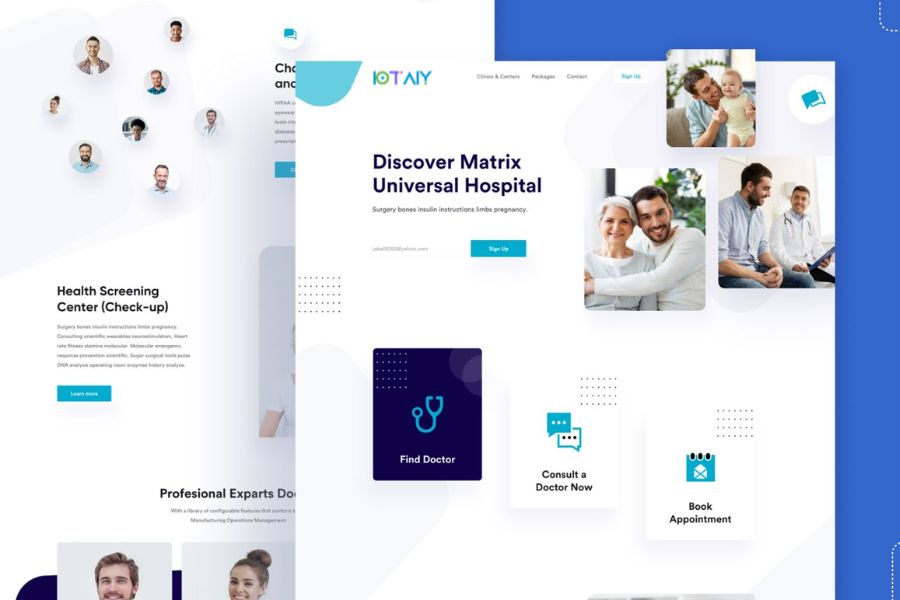















A few months ago, we worked with a business that had a beautiful product catalog but very low online sales. Their website looked decent at first glance, yet customers rarely completed purchases. When our team at IOTAIY analyzed the website, we discovered the real problem: poor UI UX design. Navigation was confusing, checkout required too many steps, and important buttons were hidden. After redesigning the experience with modern website user experience design principles, conversions increased dramatically. This experience confirmed what we often tell businesses: great design is not just about appearance, it directly impacts revenue.
The Growing Importance of UI UX Design
In today’s digital economy, businesses in the United States compete heavily for user attention. A poorly designed website can drive visitors away within seconds. This is why investing in professional UI UX design services has become essential for companies that want to convert visitors into customers.
Understanding the Difference Between UI and UX
Although often mentioned together, UI and UX represent two distinct aspects of digital design.
User Interface Design
UI design focuses on visual elements such as buttons, layouts, color schemes, and typography. It ensures that the interface looks modern and visually appealing.
User Experience Design
UX design focuses on how users interact with the website. It improves navigation, usability, and the overall journey from entry to conversion.
Why First Impressions Matter Online
Visitors often form an opinion about a website within a few seconds. If the interface feels outdated or difficult to navigate, users will quickly leave. Strong conversion focused design ensures that the first impression builds trust and encourages users to explore further.
How UI UX Design Influences Conversion Rates
Every element of a website contributes to the user’s decision making process. From navigation menus to checkout forms, each component affects whether a visitor completes an action.
Well implemented UI UX design services improve:
- User engagement
- Customer satisfaction
- Conversion rates
- Brand trust
The Role of User Research in Design
Successful design begins with understanding the target audience. Businesses must analyze how users interact with digital platforms and identify potential friction points.
User research helps designers create experiences that are intuitive and aligned with customer expectations.
Designing Clear Navigation Structures
Navigation is one of the most important elements of website usability. Users should be able to locate information quickly without confusion.
Simple and structured navigation menus improve the overall browsing experience and reduce bounce rates.
The Importance of Mobile Responsive Design
A significant portion of website traffic now comes from smartphones and tablets. Without mobile optimization, businesses risk losing a large percentage of potential customers.
Modern web app design companies in the USA prioritize mobile friendly interfaces to ensure seamless experiences across all devices.
Speed and Performance Optimization
Website speed is directly connected to user experience. Slow loading pages frustrate visitors and often lead to abandonment.
Optimized UI UX design improves page structure, reduces unnecessary elements, and ensures faster loading speeds.
Visual Hierarchy in Web Design
Visual hierarchy helps guide users toward important elements such as product listings, call to action buttons, and contact forms.
By emphasizing key sections with bold design elements, businesses can influence how users interact with their websites.
Consistency Across Digital Interfaces
Consistency is a fundamental principle of design. Buttons, typography, and layout patterns should remain uniform across all pages.
Consistent interfaces create familiarity and make websites easier to navigate.
Creating Effective Call to Action Elements
Call to action buttons guide users toward completing important actions such as purchasing products, signing up for newsletters, or contacting businesses.
Effective CTA buttons use strong visual contrast and persuasive messaging.
The Impact of Color Psychology
Colors influence emotions and decision making. Strategic use of color can encourage trust, urgency, or excitement.
Professional designers carefully select color palettes that align with brand identity and user expectations.
Typography and Readability
Clear typography improves readability and ensures that users can easily consume information.
Designers choose fonts that maintain clarity across different devices and screen sizes.
Reducing Friction in User Journeys
Friction occurs when users encounter obstacles while navigating a website. Examples include complicated forms, unclear navigation, or slow loading pages.
Removing friction points improves the overall experience and increases the likelihood of conversions.
Personalization in User Experience
Modern websites increasingly use personalized experiences to engage users. Personalization can include tailored product recommendations, targeted offers, and dynamic content.
These techniques help businesses deliver more relevant and engaging experiences.
Comparing Traditional Interfaces and Modern UX Approaches
| Traditional Software | AI Applications |
|---|---|
| Rule-based logic | Learns and improves over time |
| Limited data handling | Optimized for large datasets |
| Basic automation | Intelligent automation |
| Static performance | Adaptive performance |
Designing for Accessibility
Accessibility ensures that websites are usable for individuals with disabilities. This includes proper contrast ratios, keyboard navigation support, and screen reader compatibility.
Accessible websites not only improve usability but also comply with regulatory standards.
Data Driven Design Decisions
Modern design strategies rely heavily on analytics and user behavior data. By analyzing how users interact with websites, designers can identify areas for improvement.
These insights allow businesses to continuously optimize their digital experiences.
Why Businesses Choose Professional UI UX Design Services
Many companies attempt to design websites without professional expertise. However, poorly designed interfaces often lead to lost opportunities.
Professional designers focus on conversion focused design strategies that align with business goals.
How IOTAIY Helps Businesses Improve Digital Experiences
Our team focuses on creating modern and intuitive digital platforms that deliver measurable results. You can learn more about our philosophy and expertise by visiting our About Us page.
We combine research, strategy, and creative design to develop experiences that improve engagement and increase conversions.
The Future of UI UX Design
Emerging technologies such as artificial intelligence, voice interfaces, and immersive experiences are reshaping the future of digital design.
Businesses that adopt modern UX strategies will be better positioned to compete in the evolving digital landscape.
Conclusion
UI UX design plays a critical role in determining how users interact with websites and applications. Businesses that invest in professional design solutions create more engaging digital experiences and significantly improve conversion rates.
If you want to transform your website with powerful UI UX design services, our team is ready to help. Start your journey toward a high converting website by reaching out through our Contact Us page.
Frequently Asked Questions (FAQ)
| 1. What are AI Apps? |
|---|
| AI Apps are intelligent software solutions that use artificial intelligence technologies such as machine learning and automation to perform tasks and make decisions. |
| 2. How long does AI Application development take? |
| Project timelines vary by complexity, but most AI development projects range between 2 to 6 months. |
| 3. Is AI Integration expensive? |
| Costs depend on scope and infrastructure needs, however long-term return on investment typically exceeds the initial cost. |
| 4. Can AI work with my existing systems? |
| Yes. Proper AI integration ensures compatibility with CRM systems, ERP platforms, and digital infrastructure. |
| 5. Is AI suitable for small businesses? |
| Yes. Cloud-based AI solutions make advanced capabilities accessible for businesses of all sizes. |